
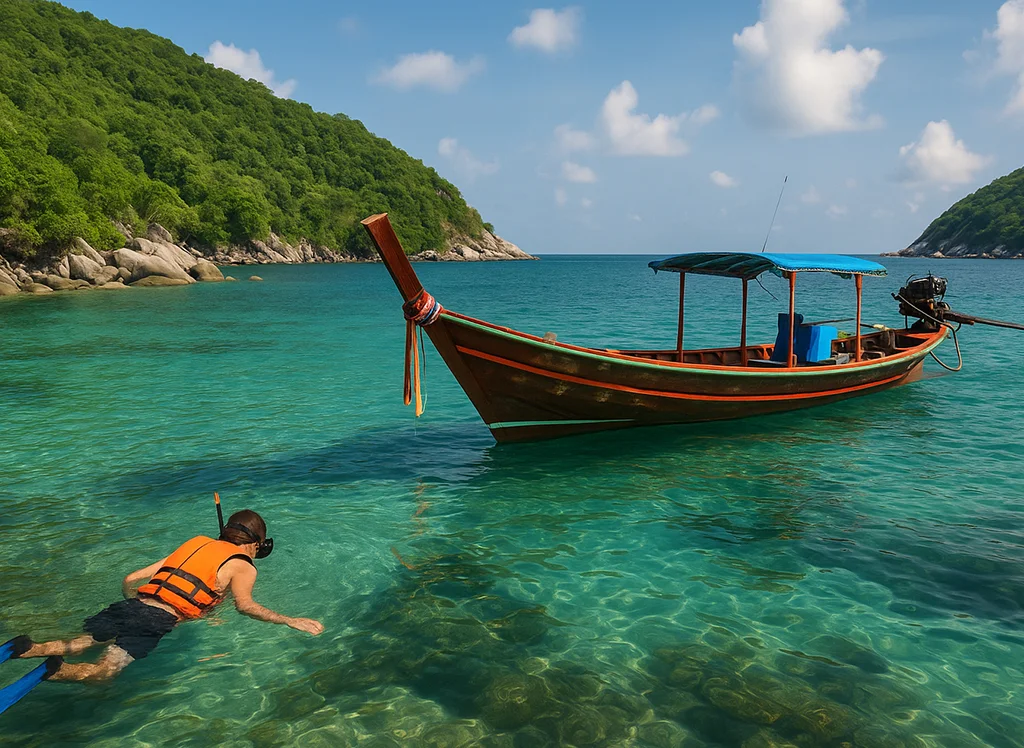
Compare four ways to snorkel from Koh Phangan
This is a planning comparison, not a live sea-condition report. Tide, wind, recent rain, visibility, current, swimming ability and boat movement decide whether a location is suitable on the day.
| Option | Access | Useful for | Check on the day | Important limit |
|---|---|---|---|---|
| Mae Haad & Koh Ma | Shore access near the Koh Ma sandbar | A first comparison for independent shore snorkeling | Tide, entry and exit, visibility and boat traffic | Shallow coral is easier to damage; never stand on reef |
| Haad Salad | Northwest beach access | Comparing another shore option near the northwest coast | Where the safe sandy entry is and how far the reef lies | Do not walk over coral or sea life to reach deeper water |
| Haad Yao | Wide northwest beach; reef conditions vary | Strong swimmers comparing a longer shore approach | Distance, depth, tide, wind and a clear return route | A saved beach name is not proof of suitable visibility |
| Guided boat trip | Operator-selected coast, Koh Tao or Ang Thong itinerary | Travellers wanting equipment, transport and supervision | Actual destination, group size, flotation, insurance and cancellation | The advertised destination can change with conditions |
Start with a suitable shore-access spot
Mae Haad and the Koh Ma sandbar are the clearest starting comparison for shore-access snorkeling. Haad Salad and Haad Yao are also frequently referenced northwest options, but reef distance, depth and safe entry change with tide and conditions. Ask locally where to enter and exit rather than swimming toward a reef by guesswork.
A beautiful beach is not automatically a good snorkeling site on that day. Visibility, waves, boat movement and the swimmer’s ability matter more than a saved list of names.
Compare a shore session with a guided boat trip
A guided trip can reach different sites and provide equipment and supervision, while a shore session offers more flexibility. Before booking, confirm the actual destination, sea-condition policy, guide-to-guest approach, flotation equipment, life jackets, insurance and what happens if conditions change.
Check tide, wind and visibility on the day
Conditions can change across the island and through the day. Ask a current local operator or accommodation about the chosen coast, and postpone when waves, current, poor visibility or boat traffic make the entry unclear.
Do not treat low tide as universally better. It may reveal a sandbar but can also make coral shallower and easier to damage. Use the tide information for access planning, not as a guarantee of good snorkeling.
Use gear that fits before entering open water
Test the mask seal and breathing tube in shallow water. Fins should fit without forcing the foot, and a flotation aid or life jacket should match the swimmer and activity. On a boat trip, ask whether equipment, prescription masks, towels and flotation are actually included rather than assuming from a package photo.
- Secure cameras and loose straps so they do not drag across coral.
- Use sun protection that does not require touching or standing on the reef.
- Carry water and stop before fatigue affects the return swim.
Match the plan to swimming ability
Beginners and children should remain in calm, shallow water with direct supervision and suitable flotation where appropriate. Never snorkel alone, enter near moving boats or continue when tired, cold, anxious or short of breath.
Protect coral and marine life
Keep fins, hands and feet away from coral; do not stand on the reef, chase animals, collect shells or feed fish. Use controlled movement, secure loose equipment and take every item back to shore.
Build a realistic half-day or full-day plan
For an independent shore session, combine one suitable beach with a weather check, transport, shaded recovery time and a backup activity. For a boat day, compare the departure point, transfer, check-in, actual water time, meals, equipment and return time. Keep the plan flexible when the operator changes sites for safety.
Frequently asked questions
Where can I snorkel from shore in Koh Phangan?
Mae Haad and Koh Ma are commonly referenced starting points. Confirm the day’s tide, visibility, entry point and boat movement locally before entering.
Is Koh Phangan snorkeling suitable for beginners?
It can be when the water is calm, the entry is clear and direct supervision or a qualified guide is available. Beginners should stay close to shore and use suitable flotation when needed.
Do I need a boat trip to snorkel?
No. Some sites have shore access, while boat trips reach other locations. Choose according to current conditions, swimming ability, supervision and the operator’s safety plan.
When is visibility best?
There is no guaranteed island-wide time. Wind, rain, waves, tide and recent weather affect each coast differently, so check the chosen site on the day.
Can I stand on coral in shallow water?
No. Coral is living and easily damaged. Float clear of the reef, control your fins and use a sandy exit point.
Is Mae Haad or Koh Ma best for snorkeling?
They are the clearest shore-access starting comparison, not a daily guarantee. Check tide, visibility, safe entry, current and boat movement before deciding whether to enter.
Can children snorkel in Koh Phangan?
Only with direct adult supervision, calm conditions, a clear shallow entry and suitable flotation where needed. A family should turn back as soon as any child is cold, tired or uncomfortable.
What should I ask before booking a snorkeling tour?
Ask for the actual destination, group size, guide and supervision plan, equipment, life jackets, insurance, food, transfer, cancellation policy and what changes when sea conditions are unsuitable.
Is Ang Thong the same as snorkeling around Koh Phangan?
No. Ang Thong is a separate marine-park day trip with its own departure, itinerary, fees and conditions. Confirm that snorkeling is included in the exact trip you are booking.
What this guide is based on
Information was checked on the date shown at the top of the page. Schedules, hours, prices and service conditions can change—the direct source is final.
- Tourism Authority of Thailand — Surat Thani Official destination source
- Phanganist — snorkeling spots in Koh Phangan Island spot overview
- PADI — Asia Blue Scuba Koh Phangan Listed local snorkeling-trip reference
- Responsible Thailand — responsible snorkeling and diving Reef-care and operator guidance